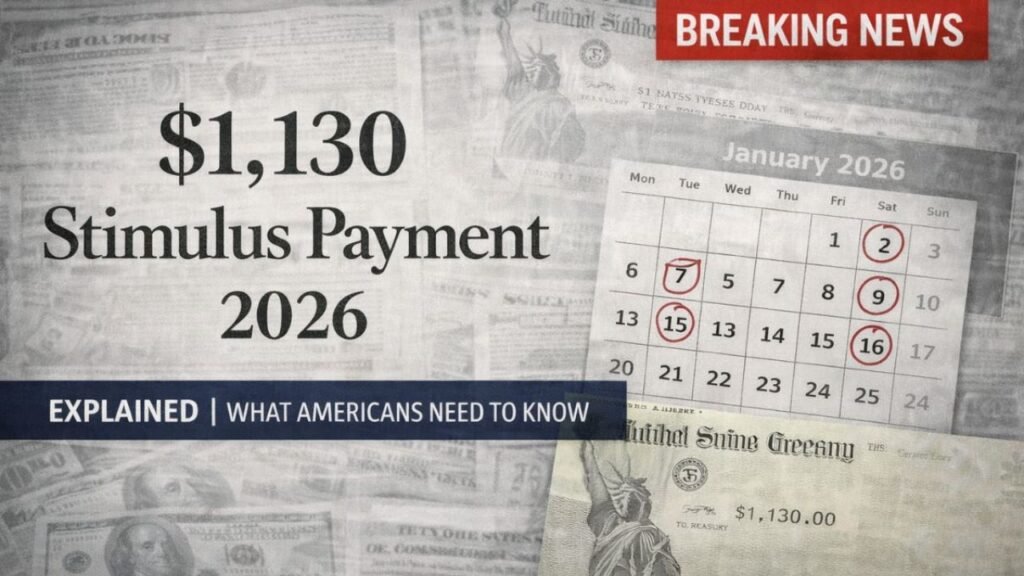
As economic pressures continue to shape household budgets across the United States, discussions about a potential $1,130 stimulus payment have gained significant attention. Many Americans are closely following developments tied to this proposed financial support, especially as rising costs affect everyday living expenses such as rent, groceries, fuel, and healthcare.
Although the payment has not yet been officially approved, early policy discussions suggest that this initiative may focus on targeted relief rather than broad-based stimulus checks seen in previous years. Understanding how such programs typically work, who might qualify, and how to prepare in advance can help households stay financially ready while avoiding unnecessary confusion.
Understanding the Purpose Behind the Proposed Payment
Why Targeted Relief Is Being Considered

Economic relief programs evolve over time to reflect changing financial conditions. In recent years, policymakers have increasingly focused on targeted financial support rather than universal payments. This shift reflects the goal of directing resources toward households that face the most immediate financial pressure.
The proposed $1,130 stimulus payment is believed to be designed to assist individuals and families navigating rising living costs. Inflation-related increases in housing, food, transportation, and healthcare expenses have created persistent strain on many budgets, particularly among low- and middle-income households.
Targeted payments are intended to:
- Support families managing essential expenses
- Provide temporary financial flexibility
- Strengthen short-term economic stability
- Encourage responsible spending within local economies

While the proposal remains under review, the underlying objective reflects a broader effort to balance fiscal responsibility with targeted assistance.
Who May Qualify for the $1,130 Stimulus
Expected Income-Based Eligibility
Eligibility criteria for targeted stimulus programs typically focus on income levels and household circumstances. Although final rules have not been released, preliminary discussions indicate that individuals and families with low to moderate earnings may be the primary recipients.
Potential qualifying groups could include:
- Working households facing rising expenses
- Seniors living on fixed incomes
- Individuals receiving certain government benefits
- Families supporting dependents
- Taxpayers meeting specified income thresholds

Income limits play a central role in determining eligibility. These thresholds ensure that financial assistance reaches households experiencing the greatest financial pressure.
The Role of Tax Records and Residency
Most federal stimulus programs rely on recent tax filings to determine eligibility. Tax returns provide verified income data, residency details, and household size information, making them a reliable reference for payment calculations.
Key factors likely to influence eligibility include:
- Most recent tax filing status
- Verified residential status
- Household income levels
- Number of dependents claimed
- Participation in eligible programs
Maintaining accurate and updated tax records increases the likelihood of receiving any future payments without delays.
How the Distribution Process May Work
Direct Deposits as the Primary Method
If the proposed payment receives formal approval, distribution will likely follow established payment methods used in previous programs. Direct deposit remains the fastest and most secure way to deliver funds.
Recipients with active bank details on file may receive payments first. This method reduces processing time and minimizes administrative costs.
Other distribution methods may include:
- Paper checks mailed to eligible recipients
- Prepaid debit cards for individuals without bank accounts
- Phased delivery schedules to manage payment volume
Using multiple delivery channels ensures broader accessibility while maintaining system efficiency.
Why Payments Are Issued in Phases
Large-scale financial programs often distribute payments in stages rather than all at once. This phased approach helps prevent system overload and reduces the risk of technical disruptions.
Factors influencing payment timing may include:
- Processing capacity of financial systems
- Verification of recipient information
- Geographic distribution logistics
- Payment method selection
As a result, not all eligible recipients receive funds on the same day. Understanding this timeline helps reduce uncertainty during rollout periods.
Timing Expectations for Potential Payments
When Payments Could Begin
While there is no confirmed distribution date, early projections suggest that payments—if approved—could begin sometime between early and mid-2026. The exact timeline depends on several procedural steps that must be completed before funds can be issued.
These steps include:
- Legislative authorization
- Budget allocation approval
- Administrative system preparation
- Eligibility verification procedures
Until these steps are completed, no official payment schedule can be guaranteed.
Monitoring Verified Announcements
Staying informed through credible sources remains essential. Official announcements typically provide clear guidance regarding eligibility, payment methods, and expected timelines.
Reliable communication helps prevent misinformation and ensures that recipients receive accurate updates.
Preparing Financially Before Approval
Updating Essential Records
Even before final confirmation, households can take practical steps to prepare for possible stimulus payments. Ensuring that personal and financial information remains current reduces the risk of processing delays.
Important actions include:
- Filing the most recent tax return accurately
- Updating banking details linked to tax records
- Verifying mailing addresses
- Reviewing personal identification information
These simple steps can significantly improve the efficiency of payment processing.
Strengthening Financial Readiness
Preparation extends beyond documentation. Establishing a strong financial foundation improves resilience regardless of whether stimulus payments are approved.
Consider focusing on:
- Tracking monthly spending patterns
- Reviewing recurring expenses
- Building emergency savings
- Prioritizing essential payments
- Avoiding reliance on unconfirmed funds
Financial readiness enhances confidence and reduces vulnerability during uncertain periods.
Why Rumors About Payments Spread Quickly
The Emotional Appeal of Financial Relief
Financial support announcements often generate widespread attention because they offer hope during periods of economic pressure. When households experience rising expenses, the possibility of additional income becomes particularly appealing.
This emotional response can lead to rapid sharing of unverified information, especially across digital platforms where content spreads quickly.
Understanding the psychology behind these reactions helps individuals approach financial news with greater awareness and caution.
The Influence of Online Information Cycles
Digital platforms frequently promote content that generates strong engagement. Headlines promising financial payments naturally attract interest, encouraging repeated visibility.
Repeated exposure to similar messages can create the impression of confirmation, even when official verification is absent. Recognizing this pattern helps prevent confusion and reduces reliance on speculation.
The Broader Economic Context
Why Targeted Payments Are Being Discussed
Economic policymakers continuously evaluate conditions affecting household finances. Rising costs, wage pressures, and shifting market dynamics influence decisions regarding financial assistance programs.
Targeted stimulus payments are often considered when:
- Living costs increase significantly
- Household spending declines
- Economic growth requires support
- Certain income groups experience financial strain
These factors shape discussions about potential financial relief measures.
Long-Term Financial Stability Matters
While stimulus payments can provide short-term relief, long-term financial stability depends on consistent income, responsible spending, and effective budgeting.
Households that maintain strong financial habits remain better prepared to navigate economic changes.
Avoiding Common Mistakes During Stimulus Discussions
Do Not Depend on Unconfirmed Payments
One of the most common financial mistakes involves planning expenses around expected payments that have not been approved. Relying on uncertain income can create unexpected financial gaps.
Instead, households should:
- Budget based on confirmed income
- Treat potential payments as optional support
- Avoid making financial commitments based on speculation
This approach protects financial stability.
Stay Alert to Potential Scams
Stimulus discussions often attract fraudulent activity. Scammers may attempt to collect sensitive information by promising guaranteed payments.
Warning signs include:
- Requests for banking information via unsolicited messages
- Claims requiring immediate action
- Links directing users to unfamiliar websites
- Messages offering priority payment access
Protecting personal information remains essential during periods of heightened financial interest.
Looking Ahead: What the Future May Hold
The proposed $1,130 stimulus payment reflects ongoing discussions about how best to support households navigating modern economic challenges. While approval remains pending, the conversation itself highlights the evolving nature of financial policy.
Future developments will depend on legislative priorities, economic data, and national budget considerations. Regardless of the outcome, preparation and awareness remain key to navigating potential changes confidently.
Final Thoughts
The possibility of a $1,130 stimulus payment in 2026 has sparked widespread interest among households seeking financial relief. Although details remain under review and official approval has not yet been granted, understanding the structure of such programs provides valuable insight into what may come next.
By maintaining updated records, monitoring verified announcements, and building flexible financial strategies, individuals can position themselves to respond effectively if payments are approved. In an environment shaped by economic shifts and digital information cycles, clarity, preparation, and informed decision-making remain the strongest tools for long-term financial confidence.