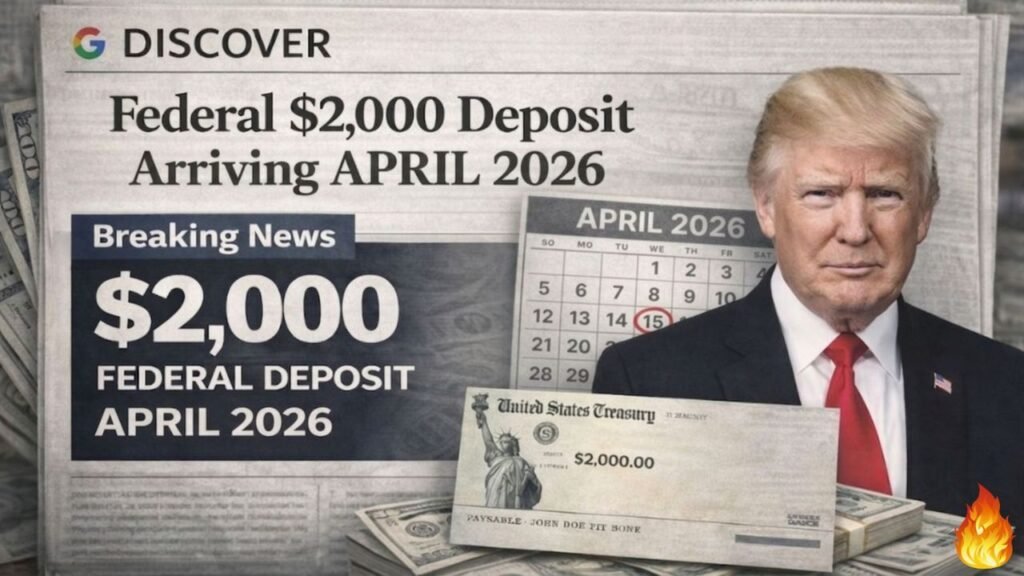
As March 2026 draws to a close, conversations about a possible $2,000 federal deposit have intensified across digital platforms. Headlines, social posts, and viral messages have suggested that a new round of government payments could soon arrive in bank accounts nationwide. For households managing rising expenses and tighter budgets, the promise of financial support is naturally appealing.
However, in an era where information travels instantly, distinguishing between verified announcements and online speculation has never been more important. Understanding how federal payments are approved, how rumors develop, and where to find reliable updates can help individuals make informed financial decisions without relying on uncertain expectations.
The Origins of the $2,000 Federal Payment Buzz
Why the Idea Feels Familiar

The concept of a $2,000 federal deposit resonates strongly because Americans have experienced similar programs in the past. During periods of national economic disruption, federal authorities issued direct payments to support households and stimulate spending. These payments became widely known and set a precedent that many people remember.
As economic pressures increase—particularly with rising housing, healthcare, and daily living costs—people often revisit memories of those earlier relief efforts. This familiarity makes new rumors feel believable, even when no official action has taken place.
In many cases, older policy proposals or archived announcements resurface online. Without context, these materials can appear current, fueling confusion and reinforcing the belief that new payments are imminent.
The Role of Social Sharing

Social media platforms and online communities accelerate the spread of financial speculation. A single unverified post can be reshared thousands of times within hours, gaining credibility simply through repetition.
Some content creators intentionally use dramatic headlines to attract clicks, while others unknowingly share outdated or inaccurate information. Either way, widespread sharing can create the illusion of confirmation—even when no official statement exists.
The Current Government Position
No Official Confirmation for March 2026
As of late March 2026, there has been no verified announcement confirming a nationwide $2,000 federal deposit. For any payment of this magnitude to occur, several formal steps must be completed before distribution begins.

These steps typically include:
- Legislative approval from policymakers
- Budget allocation to fund payments
- Eligibility criteria development
- Distribution planning through federal systems
Without these components in place, payments cannot legally or operationally proceed.
Government programs involving direct payments are always accompanied by clear public communication. The absence of such announcements strongly indicates that current rumors are speculative rather than factual.
How Official Announcements Are Made
When financial assistance programs are approved, details are released through structured and transparent communication channels. These announcements typically include:
- Eligibility requirements
- Payment amounts
- Delivery methods
- Expected timelines
Clear instructions are also provided to ensure recipients understand how to access funds safely. If none of these elements are publicly available, it is unlikely that a new payment has been authorized.
Why Financial Rumors Spread So Quickly
Economic Pressure Drives Attention
Periods of financial uncertainty often increase public sensitivity to news about relief measures. Rising costs in essential categories—housing, groceries, utilities, and insurance—have placed growing pressure on household budgets.
In such environments, even speculative information can gain momentum because it offers hope. The emotional appeal of financial support makes people more likely to believe and share unverified claims.
This dynamic explains why payment rumors can spread rapidly, especially when economic stress remains visible across multiple sectors.
The Influence of Digital Algorithms
Modern digital platforms prioritize content that generates engagement. Posts that promise financial benefits naturally attract attention, encouraging algorithms to promote them further.
As a result, sensational financial headlines often appear repeatedly in user feeds, reinforcing their perceived legitimacy. This repetition can blur the line between rumor and reality, especially for individuals seeking reassurance during uncertain times.
Understanding Legitimate Federal Payments
Where Real Deposits Come From
While a universal $2,000 payment has not been confirmed, many Americans still receive legitimate government deposits through established channels.
These may include:
- Federal tax refunds
- Benefit adjustments
- Earned credits or program updates
- Scheduled retirement or disability payments
When multiple payments arrive close together, they can create the impression of a single large deposit. This timing coincidence sometimes contributes to misunderstandings about new programs.
Why Payment Amounts Vary
Not all government payments are equal in size. Many programs calculate benefits based on individual circumstances, such as:
- Income levels
- Filing status
- Family size
- Participation in assistance programs
Because of this variability, payment amounts differ widely from person to person. Recognizing this helps reduce confusion when comparing deposits among households.
Protecting Yourself From Misleading Claims
Recognizing Warning Signs
Misinformation surrounding financial payments often follows predictable patterns. Being able to identify these signs can help prevent costly mistakes.
Watch for:
- Messages promising guaranteed payments
- Requests for personal or banking information
- Urgent instructions to act immediately
- Links directing users to unfamiliar websites
Official agencies do not request sensitive data through unsolicited messages. Any communication that asks for such information should be treated with caution.
Verifying Information Responsibly
Reliable verification remains the most effective defense against misinformation. Before acting on any payment claim, individuals should confirm details through trusted and established channels.
Simple verification habits include:
- Reviewing official announcements carefully
- Avoiding reliance on viral social posts
- Cross-checking financial updates before making decisions
These steps reduce risk and help maintain financial security.
The Financial Impact of False Expectations
Budgeting Risks
Believing in unconfirmed payments can create unintended financial strain. Some households adjust spending plans based on expected funds that never arrive, leading to shortfalls and unexpected debt.
Responsible financial planning requires focusing on confirmed income rather than speculative resources. Treating rumored payments as uncertain protects long-term stability.
Maintaining Financial Confidence
Uncertainty around payments can create anxiety, especially for households managing tight budgets. Maintaining clarity about what is confirmed—and what is not—helps reduce emotional stress and supports rational decision-making.
Financial confidence grows when individuals rely on verified information rather than assumptions.
What to Do If You Expect a Payment
Take Practical, Measured Steps
If you believe you may qualify for a legitimate payment, consider following a structured approach:
- Review official eligibility guidelines
- Confirm payment schedules and timelines
- Check bank account records carefully
- Allow time for routine processing delays
- Seek clarification from verified sources if needed
This method ensures accuracy while minimizing confusion.
Focus on Preparedness
Financial resilience depends on preparation rather than prediction. Maintaining a small emergency reserve, tracking recurring expenses, and reviewing monthly budgets regularly creates a stronger foundation regardless of external changes.
Prepared households adapt more easily to unexpected developments, including delayed or canceled payments.
Looking Ahead: The Possibility of Future Support
While no $2,000 payment has been approved for March 2026, future financial assistance programs remain possible. Economic conditions, legislative priorities, and national policy decisions continue to evolve over time.
Any future initiative will follow a formal approval process and include clear public communication before payments begin. Understanding this timeline helps set realistic expectations and prevents unnecessary speculation.
Financial awareness, rather than assumption, remains the most valuable tool in navigating evolving economic landscapes.
Final Thoughts
The conversation surrounding a potential $2,000 federal deposit in March 2026 highlights the speed at which financial rumors can spread—and the importance of verifying information before acting on it. While the idea of additional support is appealing, responsible financial planning depends on confirmed facts rather than speculation.
At present, no official program authorizes a nationwide $2,000 deposit. Individuals who stay informed through reliable sources, protect their personal information, and maintain flexible financial strategies are best positioned to navigate uncertainty with confidence.
In a fast-moving digital world, clarity and caution remain the strongest safeguards against misinformation—and the most reliable path toward long-term financial stability.